Crown lifting in Holborn
Professional tree crown lifting for homes, businesses, and managed properties

If you are looking for Crown lifting in Holborn, you are likely dealing with one of a few very common local situations: branches that have grown too low over a path, trees blocking light to a flat or office, foliage interfering with shopfront visibility, or a mature street-side tree that now feels too enclosed for the space around it. In a busy central London area like Holborn, trees often need careful attention so they continue to add value without creating avoidable problems for people, vehicles, buildings, and daily movement.
Crown lifting is the selective removal of the lower branches of a tree to raise the canopy. Done properly, it improves clearance beneath the tree while preserving the tree’s natural shape and health. For customers in Holborn, this service is often about more than appearance. It can improve access for pedestrians, make entrances safer, reduce obstruction around parking spaces and loading points, and help gardens, courtyards, and commercial frontages feel more open and usable.
Because Holborn includes a mix of older terraces, mansion blocks, offices, educational buildings, retail units, and private courtyards, the right approach needs to be practical as well as sympathetic. A local tree team understands how to work around narrow streets, restricted parking, shared access, and the expectations of both residential and commercial clients. That means the work is planned with your site in mind, not treated as a one-size-fits-all job.
What crown lifting does and why it matters in Holborn

Crown lifting is often confused with general pruning, but it serves a very specific purpose. By removing the lower limbs, the tree canopy is lifted higher from the ground. This creates clearer space below the tree and can make the whole site feel brighter, tidier, and easier to move through. In a district where space is valuable and footfall is high, that can make a significant difference.
For many Holborn properties, the benefits are immediate and practical. A lifted crown can improve visibility for visitors entering a building, make courtyards easier to maintain, and reduce the feeling of branches crowding walkways or outdoor seating areas. On residential streets, it can stop low branches from brushing against cars, bikes, or pedestrians. In shared settings, it can also help reduce complaints from neighbours or tenants about blocked views and limited light.
It is important, however, that crown lifting is carried out carefully. Removing too much at once or cutting at poor points can stress the tree and leave it looking unbalanced. A skilled arborist will assess the species, age, growth pattern, and condition of the tree before deciding how much to lift and where to make each cut. The aim is always to improve clearance while keeping the tree safe, attractive, and structurally sound.
Common reasons customers request crown lifting
Customers contact us for crown lifting in Holborn for a wide range of reasons, and the job is rarely just about one issue. Often, the tree has become a practical nuisance over time, especially where it is located near a busy entrance, a shared drive, or a commercial frontage. In some cases, the tree is healthy but simply needs its lower canopy adjusted to better suit the space.
Some of the most common reasons include improving pedestrian clearance, creating safer access around entrances, helping vehicles pass beneath branches, increasing daylight to ground-floor rooms, and keeping trees from encroaching on signs, pathways, or outdoor seating. In a central area, businesses often want the benefit of mature trees without them becoming an obstacle to customers or staff.
For domestic customers, crown lifting may be requested to open up a garden, allow more room for lawn care, improve sightlines from windows, or make an outdoor area feel less enclosed. For landlords and property managers, it can be part of wider upkeep that helps maintain a tidy, welcoming appearance for tenants, visitors, and clients.
How our crown lifting service works
A straightforward process designed around your property
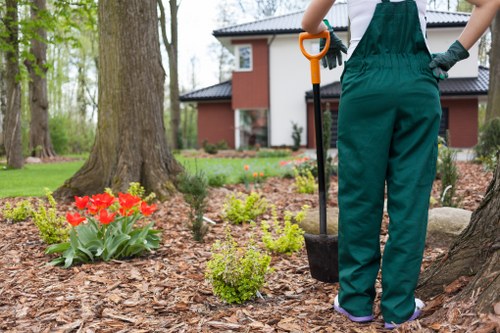
When you arrange crown lifting, the process should feel clear from the start. A proper service begins with a site assessment, where the tree’s size, species, condition, access points, and surrounding features are reviewed. In Holborn, this is especially important because trees may be close to walls, parked vehicles, private courtyards, communal access lanes, or busy pavements. Each of these factors affects how the work is planned and carried out.
After assessment, the team will determine the appropriate lift height and which lower branches can be removed without upsetting the tree’s balance. The work is carried out using suitable arboricultural methods and equipment, with attention to the health of the tree and the safety of the surroundings. Branches are removed in a controlled way, and the site is left as tidy as reasonably possible once the job is complete.
Where relevant, the team may also identify signs that the tree would benefit from other services at the same time, such as crown thinning, deadwood removal, or selective pruning around buildings. However, the focus remains on the specific result you requested: creating better clearance and a more usable space below the canopy.
What a typical visit may include
Every site is different, but a crown lifting visit commonly includes:
- Initial inspection of the tree and surrounding area
- Discussion of the clearance height and desired outcome
- Selective removal of lower branches
- Checking for weak, damaged, or congested limbs while working
- Clearing up cut material and leaving the area neat
Why crown lifting is especially useful in central Holborn

Holborn is not a place where tree work can be done casually. The area combines old and new buildings, narrow side streets, busy main roads, and a constant flow of people. That means even a relatively simple tree job needs careful timing and competent planning. Access can be limited, parking is often tight, and working space may be shared with neighbours, staff, or the public.
This is where using a local team matters. Someone familiar with central London working conditions is more likely to anticipate the practical difficulties of moving equipment, protecting nearby surfaces, and keeping disruption low. In some locations, the challenge is not the tree itself but the environment around it. A good service accounts for that from the outset.
Residential and commercial customers in Holborn often need the same end result for different reasons. A homeowner may want more daylight and room in a courtyard, while a business may want an uncluttered entrance or better visibility for customers. Either way, crown lifting can help create a smarter, safer, and more functional setting without removing the tree entirely.
Examples of local situations where crown lifting helps
Holborn properties can benefit from crown lifting when trees are located near:
- Shared residential courtyards
- Office entrances and reception areas
- Retail frontages and display windows
- Loading bays and service access points
- School, college, or institutional grounds
- Apartment blocks with communal gardens
- Footpaths, cycle routes, and pedestrian approaches
What makes a good crown lift look natural
Tree care should improve the space without making the tree look stripped

A well-executed crown lift should not look harsh or overdone. The tree should still look like a tree, not like a canopy has been hacked away. That is why the best results come from selective, considered pruning rather than excessive removal. The shape, density, and overall health of the tree all influence how the work should be approached.
Different tree species respond differently. Some tolerate lifting well, while others need a lighter touch. A mature plane tree in central London, for example, may be managed differently from a smaller ornamental tree in a private garden. A knowledgeable arborist will understand where the natural branch structure supports a lift and where caution is needed. This helps preserve both appearance and long-term health.
Good crown lifting is also about balance. Removing too many lower limbs from one side can leave the tree visually uneven or structurally compromised. The goal is to create a canopy that still feels stable and proportionate. That balance matters especially in prominent Holborn locations, where the tree may be seen by residents, visitors, staff, customers, or passers-by every day.
Benefits for residential properties
Better light, better access, better use of outdoor space
For homes in Holborn, crown lifting can transform how a garden, terrace, or shared outdoor area feels. Lower branches can make a small space seem even smaller, and in dense urban surroundings, every bit of open space counts. By creating more headroom and clearing the lower canopy, the area can feel lighter and more inviting.
It can also be very useful where trees sit close to paths, gates, sheds, or parked vehicles. Low branches can make everyday movement awkward, especially for families, older residents, or anyone carrying bags, prams, or shopping. A lifted crown can reduce those frustrations and make the property feel easier to live with.
For flats and managed residential blocks, the benefits may include improved sightlines across communal areas, easier maintenance for gardeners or caretakers, and fewer complaints about branches overhanging access routes. It is a practical improvement that often pays off in day-to-day convenience rather than dramatic visual change.
Benefits for commercial properties and managed sites
A cleaner frontage and easier movement for staff and visitors
Commercial customers often need tree work for reasons tied directly to presentation and operations. If branches are hanging too low over an entrance, they can make the building feel less approachable. If they obscure signage, lighting, or the upper sightline of a shopfront, they can reduce the clarity of the frontage. Crown lifting can resolve those issues while retaining mature greenery.
In office settings, improved clearance can make pedestrian routes feel safer and more professional. In retail or hospitality settings, a lifted crown may help customers move more comfortably around outdoor seating, delivery points, or access walkways. In mixed-use buildings, it can support both aesthetics and function without major disruption.
Property managers and facilities teams in Holborn often value services that are carried out efficiently and with minimal disturbance to occupiers. That is another reason local knowledge matters. A team used to central London conditions understands the need to plan around building access, public use, and practical site constraints.
Why choose a local company for crown lifting in Holborn
Local experience makes planning easier and the work smoother
Choosing a local company for crown lifting in Holborn gives you the benefit of practical experience in the area’s unique conditions. Central London tree work often involves restricted access, limited space for equipment, and coordination with neighbouring properties or building managers. A local team is more likely to know how to work efficiently in those conditions without causing unnecessary disruption.
Local teams are also often better placed to understand the typical property styles in the area, from period buildings with enclosed gardens to newer developments with communal landscaping. That familiarity helps when assessing how a tree should be lifted and what level of work is appropriate for the site. It also tends to make the quoting process more realistic, because the practical challenges of the job are clearer from the outset.
Customers usually want two things: a tree that looks better and a service that runs smoothly. Local experience helps deliver both. When you are dealing with a mature tree close to a pathway, boundary wall, or basement lightwell, details matter. The right team will take those details seriously.
Local factors that can affect the job
- Narrow roads and limited loading space
- Restricted parking or permit-based parking areas
- Shared access in residential blocks
- Nearby pavements and heavy pedestrian flow
- Close proximity to building fronts, railings, and boundary walls
- Need to keep disruption low for neighbours and occupiers
What to expect on the day of the work
A tidy, organised service from start to finish
On the day, you should expect the team to arrive ready to assess the tree and confirm the scope of work before beginning. If access is tight, they may need to take extra care when moving materials or setting up safely. In a place like Holborn, that attention to site conditions is often as important as the cutting itself.
The team will usually work section by section, removing the lower branches identified during the assessment. Good practice includes making proper cuts, avoiding unnecessary damage to the remaining canopy, and keeping an eye on the overall balance of the tree as the work progresses. Once the lift is complete, the area should be cleared of debris and left ready for normal use again as far as possible.
If you have concerns about access during the work, a shared courtyard, or keeping routes open for residents or staff, these should be discussed in advance. That way, the service can be planned around your building’s needs rather than causing avoidable inconvenience.
Preparation checklist for customers
Simple steps that help the job go smoothly
There are usually a few easy things you can do before the team arrives, especially if the tree is in a tight urban setting or shared environment. Good preparation helps save time and reduces the chance of avoidable disruption on the day.
Before your appointment, consider the following:
- Remove fragile items from the immediate work area
- Make sure access gates, courtyards, or shared entrances are available
- Tell neighbours, tenants, or staff if the work may affect shared space
- Move vehicles if branches or equipment may need nearby space
- Note any underground access points, cables, or site restrictions if relevant
If the tree sits in a particularly tight location, it can also help to think about where the team can safely park or unload. In central Holborn, that practical detail can make a real difference to how quickly the job can begin.
Pricing factors: what affects the cost of crown lifting?
Why quotes can vary from one property to another
Customers often want to know what influences the price of crown lifting, and the honest answer is that several site-specific factors come into play. Because every tree and location is different, prices are usually based on the amount of work, the complexity of access, the tree’s size, and how long the job is likely to take.
Common pricing factors include the height and spread of the tree, how many lower branches need to be removed, whether access is straightforward or restricted, and whether additional site challenges are present. For example, a tree in a private garden with easy access may be simpler to manage than one in a narrow Holborn courtyard with limited working space.
Other factors can include waste removal requirements, the need for traffic or pedestrian considerations, and whether there are nearby structures that require extra care. For the most accurate quote, a site-specific assessment is usually the best starting point. That way, the proposal reflects the actual work needed rather than a rough guess.
Good questions to ask when requesting a quote
- What exactly is included in the crown lift?
- How will access and site protection be handled?
- Will the work be suitable for the tree species and condition?
- What happens to the cut branches and debris?
- Are there any site factors that may change the scope of work?
Areas covered around Holborn
Serving nearby streets, neighbourhoods, and central London properties
Holborn sits in a very active part of central London, so tree work requests often come from surrounding areas as well as the immediate neighbourhood. Customers may need crown lifting for properties close to the borders of Bloomsbury, Covent Garden, Clerkenwell, Farringdon, and the wider West End or City fringe. The exact access conditions vary, but the need for careful, tidy tree work is often the same.
We also regularly find that local customers include a mix of private householders, landlords, housing managers, office occupiers, facilities teams, and businesses operating from converted buildings or contemporary developments. That variety means the service has to be flexible. A good tree team should be comfortable working in shared spaces, around varied property types, and with the professionalism expected in busy central areas.
Whether your tree is in a small rear courtyard, beside a front entrance, or part of a larger managed landscape, crown lifting can be adapted to suit the site. The key is always careful planning and an understanding of how the tree sits within the environment around it.
Frequently asked questions
Common questions from Holborn customers
Is crown lifting suitable for every tree?
Not always. Most trees can tolerate some lifting, but the amount removed depends on the species, age, condition, and structure of the tree. A proper assessment is important before any work begins.
Will crown lifting damage the tree?
When done correctly and in moderation, it is a standard arboricultural practice that can be carried out without harming the tree. Problems usually arise when too much is removed or cuts are made poorly.
How much of the crown should be lifted?
That depends on what you need the space to achieve. It may be a modest clearance adjustment or a more noticeable lift, but the final decision should always take the tree’s health and shape into account.
Can this be done in a small courtyard or tight access area?
Yes, often it can. Central London sites are frequently compact, so the work is planned to suit restricted spaces, shared access, and nearby property features.
Do I need crown lifting if branches are only slightly low?
If branches are beginning to interfere with access, light, or visibility, it may be sensible to address them early. Smaller, timely adjustments are often easier to manage than waiting until the canopy becomes a bigger issue.
Can crown lifting be combined with other tree work?
Yes, in many cases it can be combined with other services if the tree and site call for it. This may include light pruning, deadwood removal, or other safety-related maintenance.
Why customers book crown lifting early
Simple maintenance can prevent bigger issues later
Many customers wait until a tree becomes a nuisance before taking action, but early crown lifting can prevent the problem from becoming more difficult. Once lower branches begin interfering with regular movement, visibility, or maintenance, the space can feel awkward to use every day. Addressing it sooner is often the easier option.
For landlords, business owners, and property managers, early action can also support a better presentation and reduce complaints from occupiers or visitors. For homeowners, it can mean enjoying the garden or courtyard properly again without having to work around obstructive branches. In a place like Holborn, where outdoor space is often limited, that improvement matters.
If a tree is beginning to dominate the area below it, crown lifting may be the right next step. It is a sensible way to keep mature trees part of the landscape while making the surrounding space more practical and pleasant to use.
Book your crown lifting service in Holborn
Request a quote and get the right work planned for your property
If you need crown lifting in Holborn, the best next step is to arrange a site assessment and request a quote based on your tree and access conditions. That gives you a clearer idea of what is needed and helps ensure the work is carried out in a way that suits both the tree and the property around it.
Whether you manage a commercial site, look after a residential block, or simply want your own garden to feel more open and usable, a careful crown lift can make a noticeable difference. The key is choosing a team that understands central London properties and works with attention to detail.
Contact us today to discuss your requirements, request a free quote, or book your service now. A well-planned crown lifting service can improve access, light, and appearance while keeping your trees healthy and well managed.